
Crush Avoidance Signs often show up as repeated distance, shorter conversations, less eye contact, or sudden changes in behavior. One awkward moment means very little, but several consistent patterns deserve a closer look.
Also, I’m not treating every distant behavior as secret attraction. The useful question is what happens across time, whether they still make an effort, and whether their actions match their words.
They Suddenly Go Quiet
I pay attention when someone who normally chats suddenly becomes much quieter around one person. That change can reflect nerves, uncertainty, discomfort, or simply a shift in interest.
- You notice their usual chatter disappears around you.
- They seem comfortable with others but unusually quiet with you.
- Your crush gives shorter answers than before.
- Conversations end before they really get started.
- They stop volunteering little details about their day.
- Their once-easy banter suddenly feels careful.
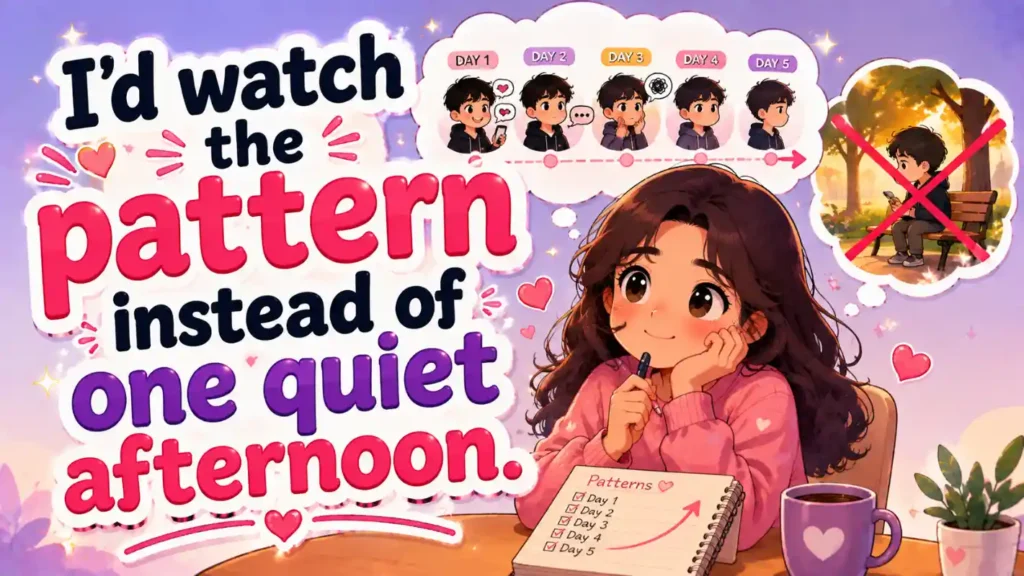
- I’d watch the pattern instead of one quiet afternoon.
- Avoidance signs become stronger when the silence repeats.
- If they still make small efforts, the story may be different.
- Quietness matters more when it arrives after obvious chemistry.
Pro Tip: Compare their behavior with their normal personality instead of comparing them with an imaginary “interested” person.
Eye Contact Gets Awkward 👀
Eye contact can become strange when feelings feel uncomfortable. A quick look away might signal nerves, but repeated avoidance can also mean they don’t want interaction.
- They look at you, then instantly look elsewhere.
- They avoid meeting your eyes during conversation.
- Their eye contact feels forced instead of natural.
- They suddenly become fascinated by their phone.
- You notice they look when you aren’t looking.
- Their friends seem to notice the awkwardness too.
- I wouldn’t call one glance proof of attraction.
- Repeated eye-contact avoidance deserves context.
- Their body may turn away before their words do.
- A consistent change is more useful than one strange moment.
Pro Tip: Look for a cluster of behaviors rather than decoding every glance like it’s a romantic weather forecast.
They Keep Their Distance
Physical distance can be surprisingly revealing. Someone may choose another seat, leave sooner, or avoid standing near you because they feel awkward—or because they simply prefer space.
- They rarely choose a spot near you anymore.
- They step away when you enter the room.
- They find reasons to leave shared spaces.
- Their body stays angled away from you.
- They avoid situations where conversation could happen.
- They suddenly stop lingering after group activities.
- You feel like proximity has become uncomfortable.
- Their distance becomes a routine, not a coincidence.
- They may be nervous about attraction.
- They may also be setting a quiet boundary.
Pro Tip: Respect physical distance immediately; never treat it as a challenge you need to overcome.
Their Texts Feel Different 📱
Texting patterns can reveal a change, especially when someone used to respond warmly. Still, busy schedules happen, so I’d compare their current behavior with their established pattern.
- Their replies become noticeably shorter.
- Questions disappear from the conversation.
- They stop sending spontaneous messages.
- Their replies feel polite instead of playful.
- They take conversations nowhere.
- You keep starting every interaction.
- Their tone changes after romantic tension appears.
- They respond quickly to others but slowly to you.
- The difference continues for weeks rather than hours.
- Their texting energy no longer matches yours.
Pro Tip: Judge consistency, not response time; one slow reply tells you almost nothing.
They Stop Initiating
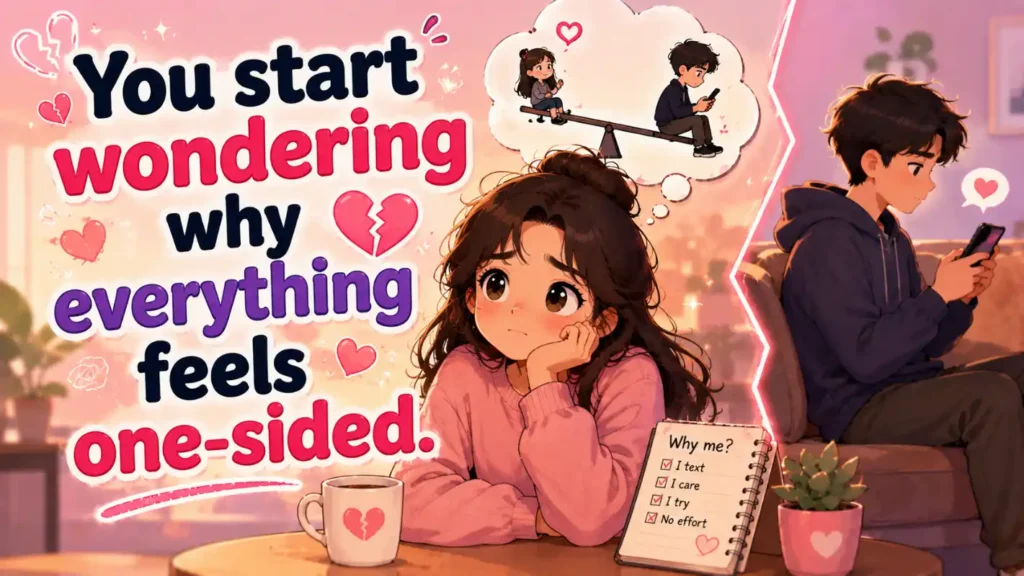
Mutual interest usually creates some form of effort. If you’re always starting conversations, suggesting plans, or reopening the chat, the imbalance matters more than any individual flirtatious moment.
- You realize every conversation starts with you.
- They rarely ask about your day.
- Plans happen only after you suggest them.
- You keep rescuing dead conversations.
- They respond but never reopen the topic.
- Their curiosity about you seems to fade.
- You start wondering why everything feels one-sided.
- Their lack of initiative becomes predictable.
- I’d trust repeated effort more than occasional chemistry.
- Silence becomes meaningful when nobody tries to bridge it.
Pro Tip: Stop carrying the entire interaction for a little while and see whether they naturally step forward.
They Act Normal With Everyone Else
This sign can feel personal because you see a sharp contrast. If they’re relaxed, funny, and engaged with everyone else but tense or distant around you, context becomes especially important.
- They joke freely with other people.
- Their body language changes around you.
- They become unusually reserved.
- Their friends get a different version of them.
- They seem nervous when you join the group.
- Their confidence disappears near you.
- They may be hiding feelings.
- They may also feel uncomfortable specifically with you.
- The contrast tells you there is a difference.
- It doesn’t automatically tell you why.
Pro Tip: Use the contrast as information, not as a verdict.
Their Friends Notice Something 😅
Friends often notice romantic tension before the people involved admit it. But teasing can also come from assumptions, so I wouldn’t treat friends’ reactions as proof.
- Their friends suddenly watch your interactions.
- Someone smirks when you walk over.
- Their friends tease them around you.
- They become embarrassed when your name comes up.
- A friend seems to know more than you do.
- Their group suddenly gets very interested in you.
- Your crush acts awkward after the teasing starts.
- They may be embarrassed by unwanted attention.
- Their reaction matters more than the friend’s joke.
- Social pressure can create sudden avoidance.
Pro Tip: Watch how your crush responds to teasing rather than trying to interrogate their friends for clues.
They Avoid One-On-One Moments
Someone who constantly prevents private conversation may be protecting their comfort or signaling that they don’t want deeper interaction. The repeated pattern matters more than one canceled invitation.
- They prefer group settings every time.
- They avoid being alone with you.
- Plans become vague whenever it’s just you two.
- They invite others when you suggest hanging out.
- They end private conversations quickly.
- They suddenly “remember” another commitment.
- You rarely get uninterrupted time together.
- Their excuses become increasingly predictable.
- Interest requires some willingness to connect.
- Avoiding every one-on-one moment is worth noticing.
Pro Tip: Offer one simple, low-pressure invitation and let their response give you useful information.
They Look When You Aren’t Looking
This is one of the most confusing patterns because it can feel romantic. Secret glances may reflect attraction, curiosity, anxiety, or simple awareness, so I’d never use them alone.
- You catch them watching from across the room.
- They immediately look away when noticed.
- They glance again a few minutes later.
- Their friends sometimes look in your direction.
- They seem aware of where you are.
- They avoid direct interaction despite those glances.
- Their eyes say more than their conversations.
- But staring alone cannot prove romantic feelings.
- Context turns a clue into a pattern.
- I’d look for effort alongside the glances.
Pro Tip: A glance becomes more meaningful when it appears alongside genuine communication and effort.
Their Warmth Comes in Bursts
Mixed signals can keep you stuck because one warm moment feels huge after several cold ones. I’d pay attention to the overall pattern instead of emotionally rewarding every small positive interaction.
- One day they’re warm, the next they’re distant.
- They flirt, then disappear.
- They seem interested until you respond.
- They initiate once and vanish again.
- Their behavior keeps resetting.
- You never know which version you’ll get.
- Occasional warmth can create false hope.
- Consistency is usually more informative.
- Attraction without stability can still be confusing.
- I’d notice the pattern before the butterflies.
Pro Tip: Track repeated behavior over several interactions instead of replaying your favorite five-minute moment.
They Seem Nervous Around You
Nervousness can look like avoidance because someone loses their usual social rhythm. Some people withdraw when they feel exposed, while others become more talkative.
- They fidget more when you’re nearby.
- Their voice changes around you.
- They suddenly forget simple words.
- Their jokes become awkward.
- They look nervous after making eye contact.
- They seem fine until you walk over.
- They may be hiding a crush.
- They may simply feel socially uncomfortable.
- Nervousness needs other clues beside it.
- I’d watch whether they eventually make an effort.
Pro Tip: Give nervous people room to relax rather than forcing them to perform confidence.
They Avoid After You Confess 💔
A noticeable change after you reveal your feelings deserves special attention. They may need time, feel embarrassed, worry about hurting you, or simply not share the same romantic interest.
- Their behavior changes immediately afterward.
- They stop initiating conversations.
- They avoid being alone with you.
- Eye contact becomes noticeably harder.
- They seem uncomfortable around mutual friends.
- They may need emotional space.
- They may not know how to respond.
- Their silence is still information.
- You don’t need to decode every nervous reaction.
- A direct answer matters more than romantic theories.
Pro Tip: Give them breathing room, then look for clear communication rather than trying to force an answer through body language.
They Keep Saying They’re Busy
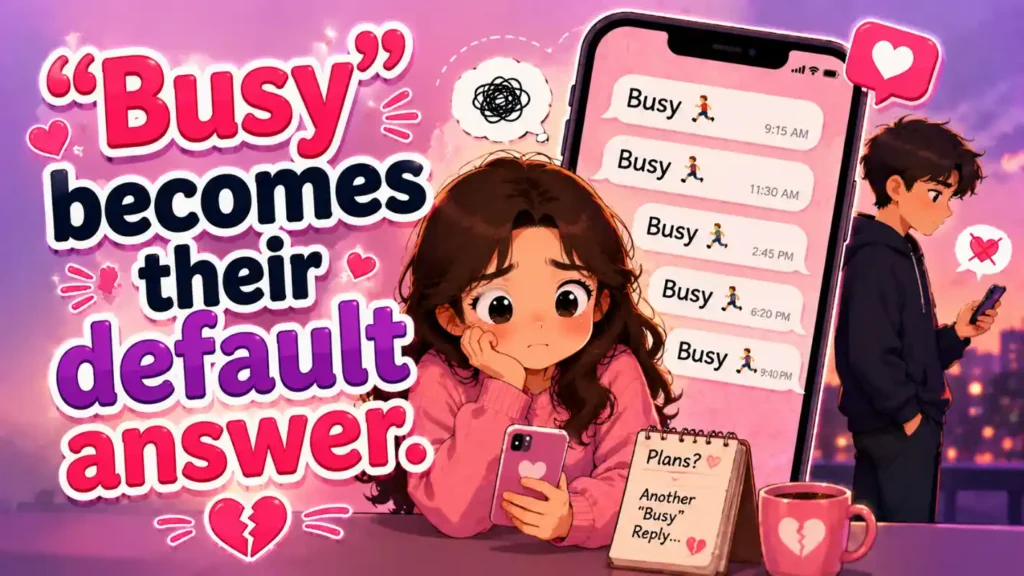
Being busy is completely normal. The clue appears when “busy” becomes the permanent answer while they still have time for everyone and everything else.
- Every invitation meets the same excuse.
- They never suggest another time.
- Their schedule seems flexible for others.
- Plans repeatedly disappear.
- They apologize but don’t repair the connection.
- Conversations stay surface-level.
- “Busy” becomes their default answer.
- Their actions don’t create room for you.
- I care more about follow-through than excuses.
- Repeated unavailability can signal low interest.
Pro Tip: Notice whether they offer an alternative; “I can’t Friday, but Saturday works” is very different from endless vagueness.
They Put Up Emotional Walls
Sometimes avoidance isn’t about physical distance. Someone can remain polite while keeping every meaningful conversation locked behind a tiny emotional door.
- They avoid personal topics.
- Vulnerable conversations make them retreat.
- They change subjects when feelings appear.
- Compliments make them uncomfortable.
- Romance makes them suddenly distant.
- They keep everything safely casual.
- You struggle to learn what they actually feel.
- Emotional closeness never seems to develop.
- Their boundaries deserve respect.
- You shouldn’t have to pry feelings out of them.
Pro Tip: Offer openness without demanding vulnerability in return.
The Pattern Says More Than One Sign ❤️
The most useful way to read avoidance is to step back. I’ve found that one awkward behavior can create a whole romantic story in your head, while a three-week pattern tells a much clearer story.
- They avoid contact consistently.
- They rarely initiate.
- They cancel without rescheduling.
- They stay distant both online and offline.
- Their warmth keeps disappearing.
- You feel anxious after nearly every interaction.
- Their actions don’t support their occasional flirtation.
- Their words and behavior don’t line up.
- You keep searching for hidden meaning instead of receiving clear effort.
- The healthiest clue may simply be their consistent choice.
Pro Tip: Look for reciprocity. Attraction can be complicated, but healthy interest still leaves room for mutual effort.
Conclusion
Crush Avoidance Signs become easier to understand when you stop chasing individual clues and start watching patterns. Save this guide for the next confusing interaction, share it with a friend stuck in mixed-signal territory, and protect your confidence while you figure things out. The right connection shouldn’t require you to solve a mystery just to feel wanted.
FAQs:
Not necessarily. Avoidance can happen because of shyness, uncertainty, discomfort, boundaries, or lack of romantic interest. Look for the wider pattern rather than treating distance as proof.
They might feel nervous, embarrassed, shy, or uncomfortable. Eye contact alone can’t tell you which explanation is correct, so compare it with communication, effort, and other behaviors.
That combination can feel confusing. It may reflect attraction mixed with nervousness, but it can also reflect curiosity or uncertainty, so look for whether they make any genuine effort to connect.
If you’re always initiating and receiving little effort back, giving the conversation space is reasonable. It lets you see whether they choose to reconnect without you carrying the relationship alone.
Look for a consistent pattern of low effort: little communication, no initiation, repeated cancellations, emotional distance, and no attempts to reconnect. One awkward interaction isn’t enough to draw that conclusion.

Flirt Coach & Vibe CreatorNew York native Tyler mixes humor, confidence, and just the right amount of rizz. His content is designed to help guys and girls alike break the ice and build attraction with style. Tyler’s motto? “If you can make them smile, you’re halfway there.”